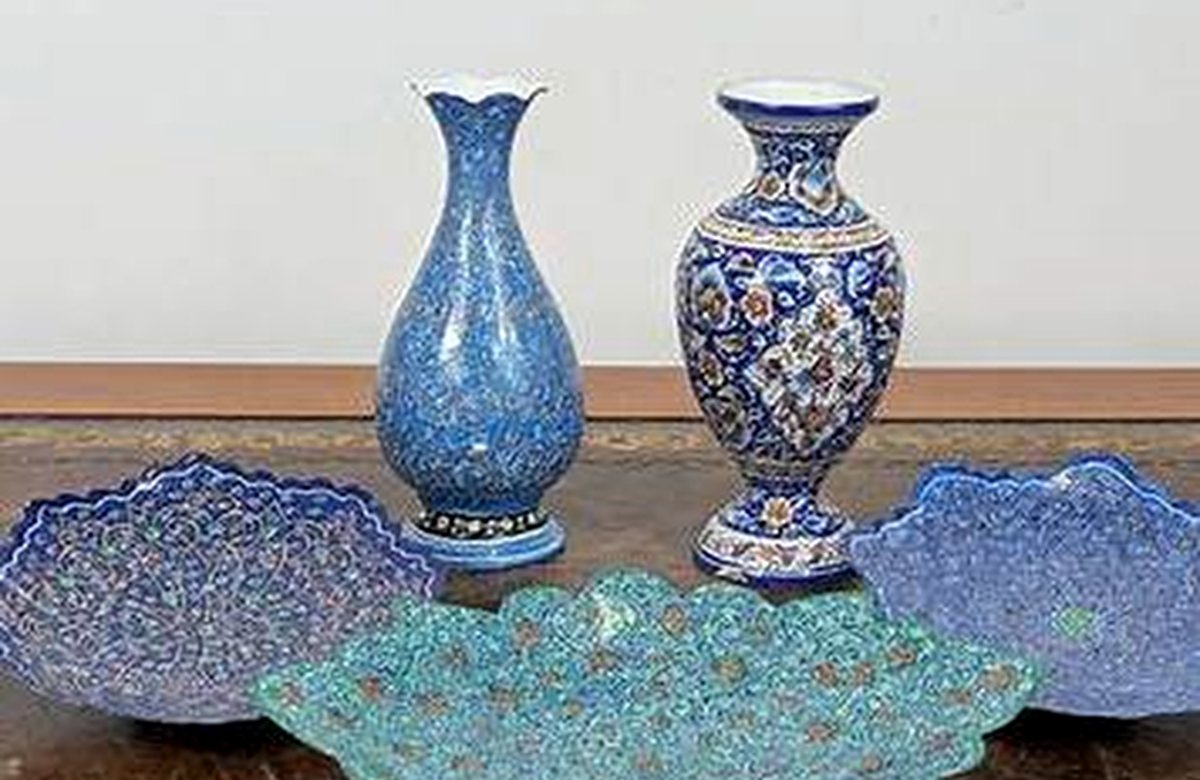
A regional guide is most useful when it explains why certain techniques became visible in one place without pretending they existed nowhere else. Northeastern Iran, especially the Neyshabur area, has long been associated with turquoise prized across Persian decorative culture.
Place and material
Turquoise from northeastern Iran, especially the Neyshabur area, has a long reputation in jewellery and decorative art. Natural stone varies in colour, matrix and surface character. The colour turquoise also became important beyond the stone itself, especially in tilework and enamel.
Seen this way, the object becomes more than a souvenir; it becomes evidence of a process, a material choice and a particular visual culture. Regional identity is strongest when it is tied to observable materials, techniques and market histories rather than vague claims of exclusivity.
Workshop traditions
Khorasan and the Neyshabur area are closely associated with turquoise, a stone that travelled widely through Persian decorative culture. Regional labels are useful, but they should not be treated as sealed borders: makers, materials and designs move between cities, villages and markets.
That distinction matters because decorative complexity can hide poor finishing just as easily as it can reveal skill. Regional identity is strongest when it is tied to observable materials, techniques and market histories rather than vague claims of exclusivity.
What moves between regions
For a contemporary buyer, this creates a useful balance between visual pleasure and informed judgement. Seen this way, the object becomes more than a souvenir; it becomes evidence of a process, a material choice and a particular visual culture.
The strongest examples usually feel controlled rather than mechanically perfect: the eye can sense rhythm without losing the presence of the hand. Regional identity is strongest when it is tied to observable materials, techniques and market histories rather than vague claims of exclusivity.
How to read regional labels
Turquoise from northeastern Iran, especially the Neyshabur area, has a long reputation in jewellery and decorative art. Natural stone varies in colour, matrix and surface character. The colour turquoise also became important beyond the stone itself, especially in tilework and enamel.
It is also worth separating historical association from modern marketing. A living craft can be valuable without pretending every contemporary object is an unchanged survival from antiquity. Regional identity is strongest when it is tied to observable materials, techniques and market histories rather than vague claims of exclusivity.
- Turquoise from northeastern Iran, especially the Neyshabur area, has a long reputation in jewellery and decorative art. Natural stone varies in colour, matrix and surface character.
- The colour turquoise also became important beyond the stone itself, especially in tilework and enamel.
- Khorasan and the Neyshabur area are closely associated with turquoise, a stone that travelled widely through Persian decorative culture.
Sources & further reading
- UNESCO Intangible Cultural Heritage — Iran
- The Metropolitan Museum of Art — Heilbrunn Timeline
- Encyclopaedia Iranica
This Journal is written as accessible editorial guidance, not as an attribution or authentication service. Dates, workshop practices and regional labels can vary by object.