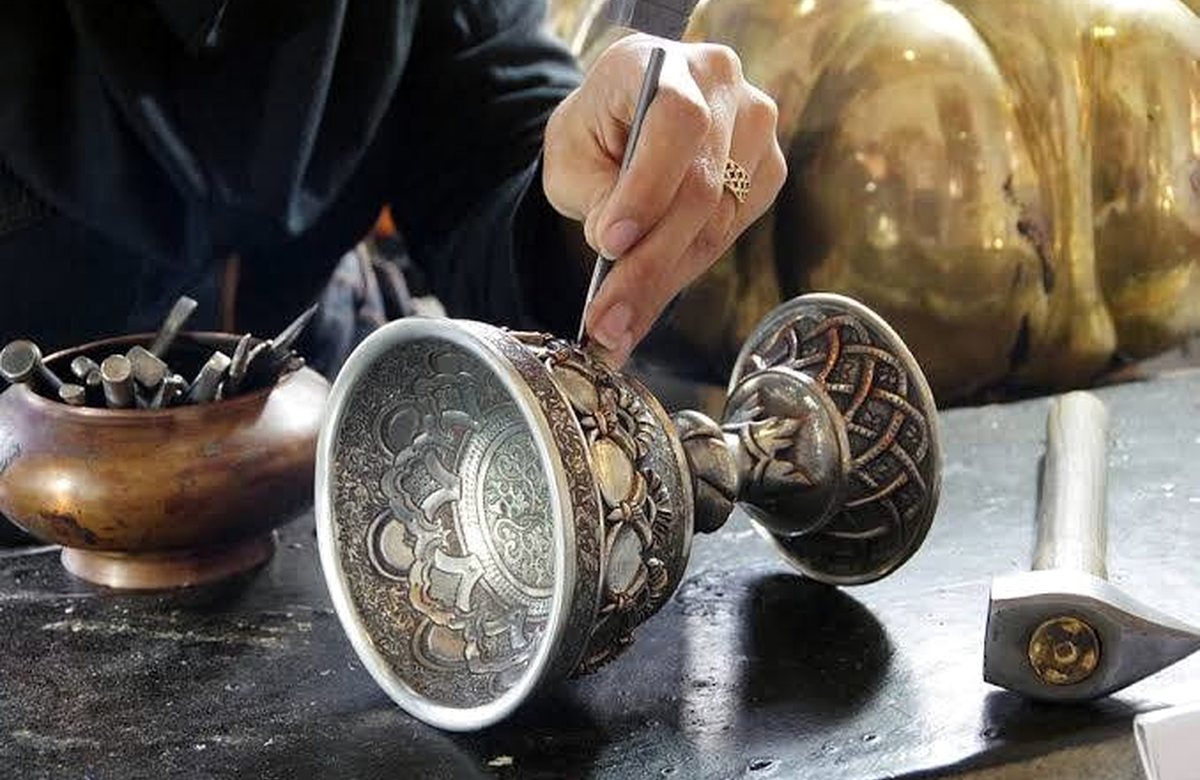
The most useful questions are practical: what is the object made from, which stages are done by hand, and where should the finish be strongest? A practical guide to materials, handmade variation, workmanship, documentation and choosing pieces that feel worth keeping.
Begin with workmanship
Buying well begins with process. Ask what the object is made from, which stages are done by hand, and where the hardest workmanship is visible. Handmade does not mean careless. Small variations can be evidence of process, while cracks, loose parts, unstable surfaces and poor joins are quality issues.
The strongest examples usually feel controlled rather than mechanically perfect: the eye can sense rhythm without losing the presence of the hand. If photographs are the only way to inspect a piece, ask for clear views of the front, back, edges and any area where different materials meet.
Look closely at condition
The safest care principle is minimal intervention: dry dusting, soft cloths and stable indoor conditions are usually better than strong cleaners or frequent polishing. If a piece combines materials, treat it according to the most vulnerable material rather than the toughest one.
It is also worth separating historical association from modern marketing. A living craft can be valuable without pretending every contemporary object is an unchanged survival from antiquity. If photographs are the only way to inspect a piece, ask for clear views of the front, back, edges and any area where different materials meet.
Ask better buying questions
That distinction matters because decorative complexity can hide poor finishing just as easily as it can reveal skill. The strongest examples usually feel controlled rather than mechanically perfect: the eye can sense rhythm without losing the presence of the hand.
For a contemporary buyer, this creates a useful balance between visual pleasure and informed judgement. If photographs are the only way to inspect a piece, ask for clear views of the front, back, edges and any area where different materials meet.
Protect the piece after purchase
Buying well begins with process. Ask what the object is made from, which stages are done by hand, and where the hardest workmanship is visible. Handmade does not mean careless. Small variations can be evidence of process, while cracks, loose parts, unstable surfaces and poor joins are quality issues.
Seen this way, the object becomes more than a souvenir; it becomes evidence of a process, a material choice and a particular visual culture. If photographs are the only way to inspect a piece, ask for clear views of the front, back, edges and any area where different materials meet.
- Buying well begins with process. Ask what the object is made from, which stages are done by hand, and where the hardest workmanship is visible.
- Handmade does not mean careless. Small variations can be evidence of process, while cracks, loose parts, unstable surfaces and poor joins are quality issues.
- The safest care principle is minimal intervention: dry dusting, soft cloths and stable indoor conditions are usually better than strong cleaners or frequent polishing.
Sources & further reading
- Victoria and Albert Museum — Caring for collections and decorative arts
- The Metropolitan Museum of Art — Heilbrunn Timeline
- UNESCO Intangible Cultural Heritage — Iran
This Journal is written as accessible editorial guidance, not as an attribution or authentication service. Dates, workshop practices and regional labels can vary by object.