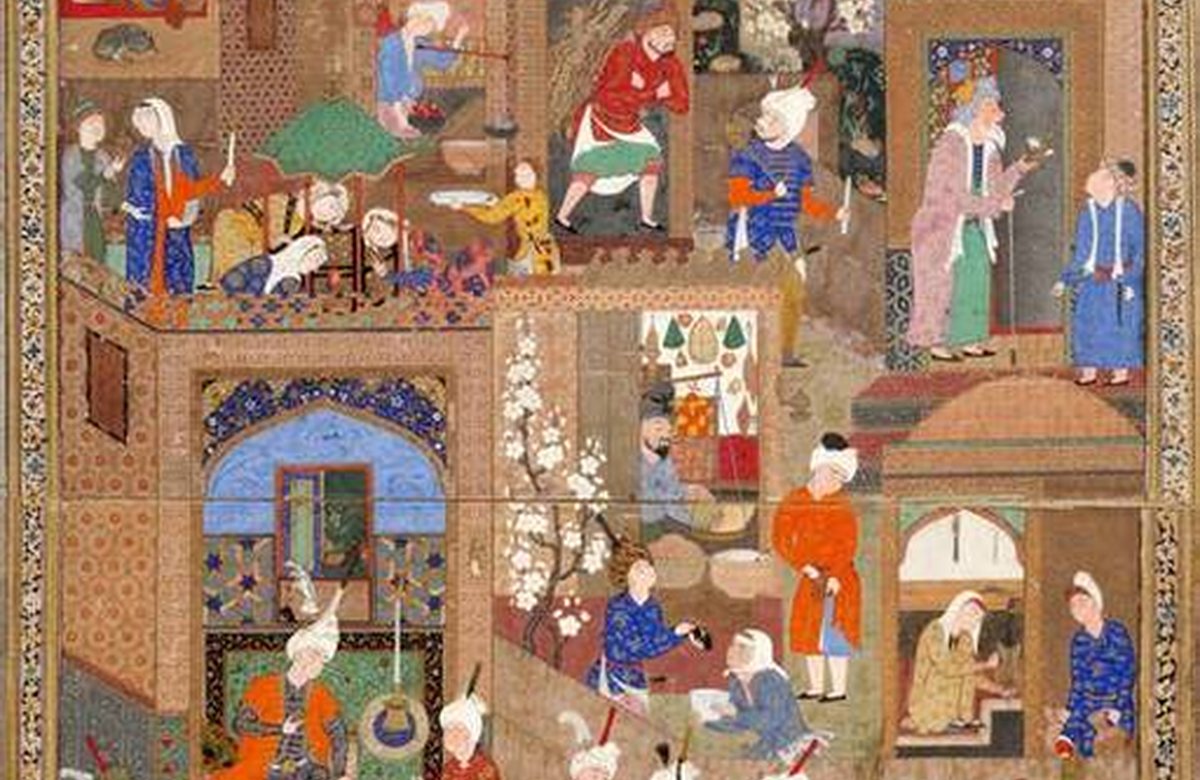
Looking closely at one material or motif is a useful way to connect very different parts of Persian visual culture. Nightingales, peacocks and other birds animate Persian painting, textiles and objects with movement, sound and poetic association.
Why it stands out
Persian tilework can be read as architecture and graphic design at once. Repeating units create large surfaces while calligraphy and vegetal ornament establish hierarchy. Different periods and buildings use different techniques, including mosaic tile and painted multi-colour tiles; it is better to identify a method carefully than to treat all tile surfaces as the same craft.
That distinction matters because decorative complexity can hide poor finishing just as easily as it can reveal skill. Meaning is rarely fixed forever, so visual context is more reliable than assigning one universal symbolic translation.
Material and visual behaviour
Textiles reveal craft through touch as much as sight. Fibre, weave, print, dye and finishing determine how a cloth hangs, ages and responds to use. Persian textile traditions include urban workshop production as well as village and nomadic practices, so one label cannot describe every object.
The strongest examples usually feel controlled rather than mechanically perfect: the eye can sense rhythm without losing the presence of the hand. Meaning is rarely fixed forever, so visual context is more reliable than assigning one universal symbolic translation.
How the motif travels
Seen this way, the object becomes more than a souvenir; it becomes evidence of a process, a material choice and a particular visual culture. That distinction matters because decorative complexity can hide poor finishing just as easily as it can reveal skill.
It is also worth separating historical association from modern marketing. A living craft can be valuable without pretending every contemporary object is an unchanged survival from antiquity. Meaning is rarely fixed forever, so visual context is more reliable than assigning one universal symbolic translation.
How to use this knowledge
Persian tilework can be read as architecture and graphic design at once. Repeating units create large surfaces while calligraphy and vegetal ornament establish hierarchy. Different periods and buildings use different techniques, including mosaic tile and painted multi-colour tiles; it is better to identify a method carefully than to treat all tile surfaces as the same craft.
For a contemporary buyer, this creates a useful balance between visual pleasure and informed judgement. Meaning is rarely fixed forever, so visual context is more reliable than assigning one universal symbolic translation.
- Persian tilework can be read as architecture and graphic design at once. Repeating units create large surfaces while calligraphy and vegetal ornament establish hierarchy.
- Different periods and buildings use different techniques, including mosaic tile and painted multi-colour tiles; it is better to identify a method carefully than to treat all tile surfaces as the same craft.
- Textiles reveal craft through touch as much as sight. Fibre, weave, print, dye and finishing determine how a cloth hangs, ages and responds to use.
Sources & further reading
- Victoria and Albert Museum — Islamic Middle East collections
- The Metropolitan Museum of Art — Heilbrunn Timeline
- British Museum — Collection
This Journal is written as accessible editorial guidance, not as an attribution or authentication service. Dates, workshop practices and regional labels can vary by object.